
Cruelty to Animals Reflects the Human Heart; in the Case of the State, It Also Reveals the Character of Its Institutions
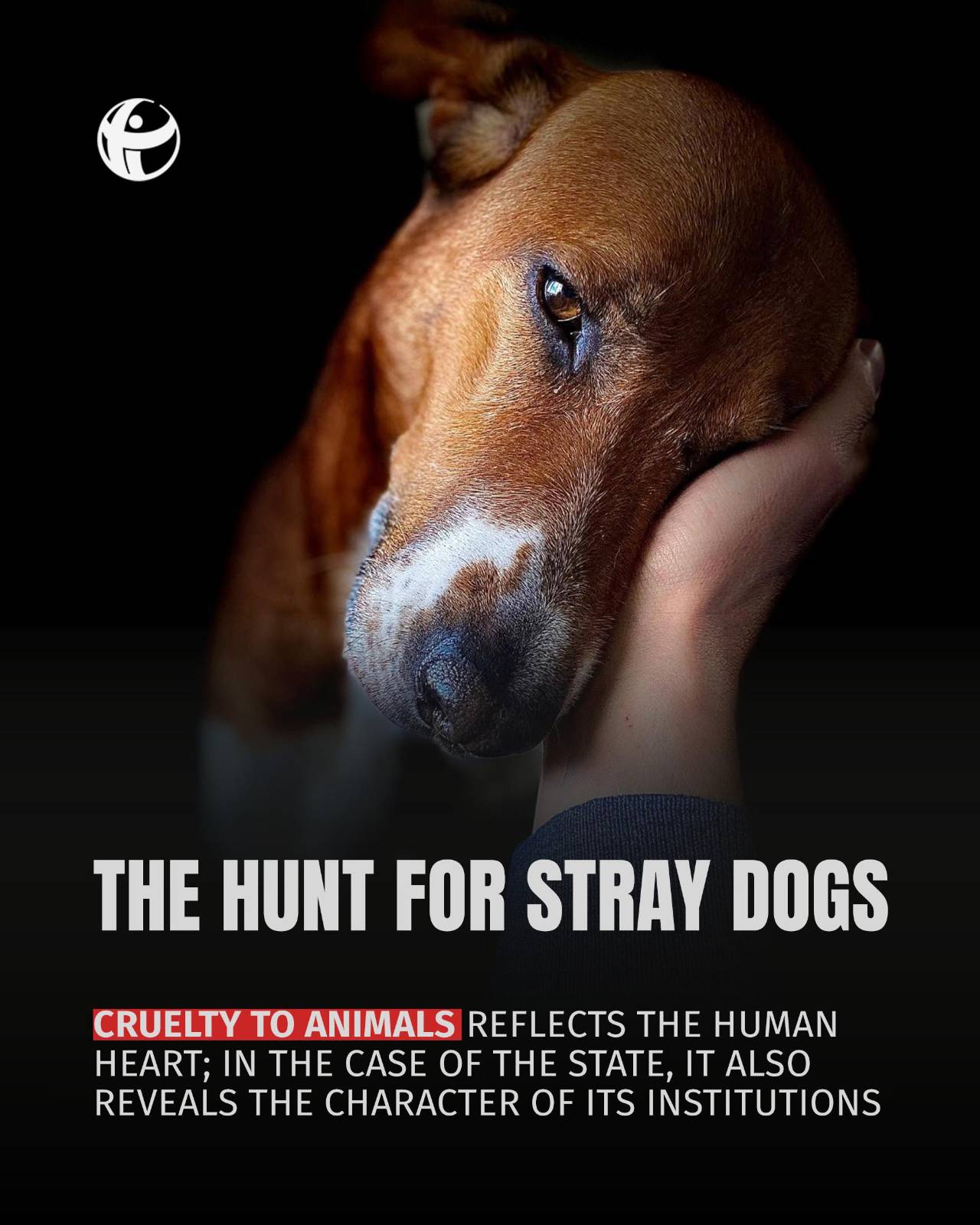
Immanuel Kant once said: “He who is cruel to animals becomes hard-hearted in his dealings with human beings as well. We can judge a person's heart by the way they treat animals.” (Immanuel Kant, Lectures on Ethics).
These words of the great philosopher were spoken approximately two and a half centuries ago, but today they resonate particularly painfully in Georgia.
On 31 October 2026, Nodar Meladze’s Saturday broadcast a report entitled “Nightmare at Night / How the State Is Killing Dogs / Shocking Footage from Secret Burial Sites”. The report revealed how, allegedly on the instructions of the authorities, stray dogs are captured, killed and buried in designated burial pits. It includes exclusive footage showing stray dogs, picked up from the streets at night and subsequently killed, being transported to an area near Veli Cemetery and dumped into specially prepared pits. According to the footage, a minibus loaded with dead dogs leaves the municipal shelter on Tvalchrelidze Street shortly after midnight and heads towards Veli Cemetery. Following several weeks of observation, the journalists established that the burials take place on working days but outside working hours, beginning around midnight. The white minibus, from which the shelter’s insignia have been removed, sometimes makes two trips in a single night.
The report links this footage to broader public debate on the same issue. Social media are awash with reports that even dogs whose care is regulated by a municipal council resolution and formally agreed upon in writing with the authorities are disappearing.
Government agencies categorically deny these allegations. Shortly after the report was broadcast, later that same evening, Tbilisi City Hall issued a statement saying that the site in question was designated for the burial of animal carcasses of animals that had died in Tbilisi for various reasons. According to City Hall, the video footage released by TV Pirveli depicts a process that is fully permitted under the law. The municipality maintained that the animals referred to by citizens had died as a result of various diseases, road traffic accidents, other accidents or natural causes.
On 2 April 2026, Transparency International Georgia published an analysis entitled “Management or Elimination? The Threat Posed to Stray and Community Dogs by the Government’s New Decree”. The organisation concluded that the practice of removing animals from their locations and not returning them is inhumane and contrary to both international standards and Georgian law.
Other Reports Concerning the Possible Extermination of Stray Dogs
Public discussion in Georgia about the possible extermination of stray dogs has been ongoing for quite some time. The first alarming reports on this issue came to public attention in the spring of this year. According to reports received from various parts of Georgia, including Gori, Zugdidi, Tkibuli and elsewhere, stray dogs were disappearing from the streets. Significantly, these reports indicated that the animals disappearing were not only, or even primarily, sick dogs, but also perfectly healthy, sterilised and vaccinated ones.
Particularly disturbing were reports and video footage from Gori showing smoke rising at night from the crematorium at the Gori Stray Animal Shelter. According to the person who filmed it, the crematorium operated throughout the night, and there was a strong smell of burning in the surrounding area. Suspicions arose that animals might also have been burned alive. The shelter administration stated that the crematorium was used exclusively for the disposal of veterinary waste and animals that had already died, and not for killing healthy dogs. The Environmental Supervision Department stated that its inspection had “found no violations” at the Gori shelter.
In October 2026, the media released footage showing dozens of puppies crammed into a dirty, wet enclosure measuring between five and seven square metres. Some appeared wet and severely underweight. The regional agency explained that its staff had been cleaning the premises and had therefore gathered all the puppies in a single enclosure. On 16 October, a protest took place outside the shelter, and participants succeeded in securing the release of most of the puppies. According to various reports, between 100 and 300 animals were removed. Activists stated that many of the animals were found to be suffering from serious viral diseases, while the weakest puppies died during transportation. Other alleged violations included the absence of quarantine facilities, a lack of documentation concerning the puppies’ origins, inadequate heating and poor sanitary conditions. Sick and healthy animals, as well as the remains of dead dogs, were reportedly kept together in the same enclosure.
The Government’s “Programme” for Managing Dog Overpopulation
The circumstances described above, which have been reflected in practice, are the result of the Government’s so-called “2026 Programme for the Management of Dog Overpopulation”, approved by Government Decree No. 412 of 25 February 2026.
The programme’s main declared objectives were to ensure the traceability of dogs and prevent rabies. The document identifies two objectives: managing overpopulation, preventing the spread of rabies, protecting human health and public safety, and promoting “humane methods”.
The programme covers stray and community dogs, as well as owned dogs. For the former, it provides for identification and registration, anti-rabies vaccination, sterilisation/neutering and, where necessary, testing for leishmaniasis and distemper. For owned dogs, it provides for registration and the sterilisation of female dogs.
Under the programme, approximately 102,092 owned dogs were to be microchipped and registered through a door-to-door approach, 13,619 female dogs were to be sterilised and, notably, approximately 36,116 stray or community dogs were to be captured and transported to four municipal shelters. Dogs from Mtskheta-Mtianeti were to be transported to Tbilisi; those from Kakheti and Kvemo Kartli to Gurjaani; those from Shida Kartli and Samtskhe-Javakheti to Gori; and those from Imereti, Racha-Lechkhumi, Guria and Samegrelo to Kutaisi. This means that dogs were often to be transported over distances of hundreds of kilometres.
According to the programme, dogs are to be sterilised, registered and vaccinated at the shelters. Following the procedures, they are to be handed over to the National Food Agency “for the purpose of returning them to their natural environment”, while the work carried out is to be recorded in a unified database. The most controversial provision is found in Article 3(3). It prohibits the return of dogs to areas near kindergartens, schools, medical facilities, food establishments, agricultural markets, hotels, and children's and sports playgrounds. It further states, in general terms, that “in such cases, the location for returning the animal to its natural environment must be changed”. The document does not specify where the dogs are to be taken, what radius is covered by the prohibition on returning them to the vicinity of the above-mentioned “facilities”, or who is responsible for making such decisions.
A further striking feature of the document is what it leaves unsaid. Although “humane methods” are listed as an objective, the programme does not explain what they entail. It says nothing about the methods of capture, transportation conditions or euthanasia, nor does it specify what happens to a dog that cannot be returned to its “usual” location. The programme provides neither for independent oversight nor for notifying the persons who care for community dogs, nor for publicly recording the fate of each individual animal.
The Government Programme and the Measures Implemented Under It Violate the Principles of Humanity and Georgian Legislation
The practice of removing stray and community animals from their locations and not returning them, quite apart from their physical extermination, is contrary to both international standards and the requirements of national legislation.
The authorities are attempting to convince the public that everything is being done in accordance with the law. However, the facts outlined above, supported by video evidence and numerous reports from citizens, point to an entirely different picture. Against this background, the State authorities’ blanket denials are wholly unconvincing. It is difficult to believe declarations about the “humane treatment” of stray animals coming from a government that has brutally cracked down on human beings expressing their dissent in the streets.
Moreover, the measures described above are also inconsistent with the relevant provisions of Georgian legislation itself.
Article 259 of the Criminal Code of Georgia criminalises the torture of an animal, cruel treatment of an animal or other forms of violence against it, while Article 104 of the Code of Administrative Offences classifies the improper treatment of an animal as an administrative offence.
The treatment of animals is regulated by the Law of Georgia on Domestic Pet Animals. The principal principles established by this Law are as follows:
The principle of animal welfare. The Law enshrines the principles of animal welfare (Article 4). Animal welfare entails creating the conditions necessary for the proper care and keeping of an animal, ensuring its access to food and water, preventing disease, and protecting it from pain and suffering (Article 3, subparagraph (h)).
The principle of animal population management. Article 18 of the Law establishes the rules governing the management of the population of stray and community animals. In particular, for this purpose, the competent municipal authority is responsible for ensuring the identification and registration, sterilisation/neutering and anti-rabies vaccination of stray and community animals (Article 18(1)).
The prohibition of cruel or other improper treatment. The Law prohibits the improper or cruel treatment of animals, as well as facilitating such treatment. This includes beating an animal, keeping it permanently tethered, subjecting it to physical exertion that causes it suffering, and other such acts (Article 19(1)).
Animal euthanasia. The Law permits animal euthanasia but prohibits the use of inhumane methods. In particular, euthanasia must be carried out without causing the animal physical pain or suffering, using substances subject to special control or medicinal products equivalent to pharmaceutical products subject to special control. Euthanasia may be performed only on the basis of a veterinarian’s opinion supported by relevant examinations and/or veterinary observation (Article 21(1)–(2)).
Animal euthanasia is permissible only in circumstances prescribed by law. The only lawful grounds for euthanasia are: an animal’s uncontrollable aggressive behaviour, which makes it impossible for the animal to coexist with another animal and/or a human being; complete paralysis, paresis and/or another incurable disease; suspicion of rabies infection or disease, and even then only subject to the preconditions established by Georgian legislation; an infection that poses a particularly serious threat to human and/or animal health; an injury and/or damage incompatible with life; irreversible debilitation; or a congenital defect incompatible with life (Article 21(3)). Euthanasia in any other circumstances is unlawful.
The above principles and provisions of the Law demonstrate that the killing of stray dogs without satisfying the statutory conditions constitutes an act punishable under the law, including under criminal law. The killing of healthy, non-aggressive and vaccinated dogs cannot possibly be justified within the legal framework governing euthanasia.
Furthermore, Article 3(3) of the above-mentioned Government Programme imposes additional restrictions beyond those already established by law. In particular, as noted above, the provision prohibits the return of dogs to areas near kindergartens, schools, medical facilities, food establishments, agricultural markets, hotels, and children's and sports playgrounds.
At the same time, the Law on Domestic Pet Animals prohibits the keeping of community animals only at specific institutions or premises (schools, kindergartens, clinics and metro stations). The Government Programme expands this list to include areas around food establishments, agricultural markets and hotels. Moreover, it does not define the radius within which the prohibition applies, the criteria for assessing the relevant area, or other essential details. Such a vague provision violates the principle of legal certainty and is contrary to a higher-ranking normative act, namely a law of Georgia.
In addition, the removal from their established locations of animals that have already been sterilised, vaccinated and marked is also unjustified, since they no longer pose a risk of increasing the population. Their failure to be returned to those locations is inconsistent with the principles of the above-mentioned Law.
The authorities’ policy towards stray animals is not only inhumane and unlawful but also ineffective. As we shall see below, the use of inhumane methods cannot solve the problem of overpopulation, since new animals abandoned by people will continue to appear in the same areas. A systemic solution requires controlling the breeding of owned animals, expanding sterilisation/neutering programmes and implementing preventive policies.
International Standards and the Practice of Civilised Countries
The principal international standards clearly establish two things: (1) a dog should be returned to the place from which it was captured; and (2) the mass killing of dogs does not solve the problem of overpopulation.
Chapter 7.7 of the World Organisation for Animal Health (WOAH) Terrestrial Animal Health Code recommends the CNVR method: Catch, Neuter, Vaccinate and Return. The document does not recommend relocating animals to other areas, as this causes stress, conflict and mortality. Returning animals to the same location is the effective approach. The Code also states that the mass killing of animals is ineffective and may even produce the opposite result.
Council of Europe Convention for the Protection of Pet Animals (ETS No. 125). Under Article 3 of the Convention, the infliction of unnecessary physical or mental suffering on an animal is prohibited. Reducing the number of stray animals is permissible only without causing pain or suffering, and any suffering during capture must be minimised.
European Union Regulation (EU) 2026/1818 of 17 June 2026 establishes uniform rules on the welfare and traceability of dogs and cats, including rules concerning shelters, microchipping and registration.
The Netherlands – Results Without Killing. The Netherlands addressed the problem of stray dogs without euthanasia, through a universal, State-funded CNVR programme. All dogs are microchipped and registered. Consequently, a dog found on the street is treated as a lost pet, while abandoning an animal constitutes a criminal offence.
The Ineffectiveness of the Measures Taken by the Georgian Authorities Is Also Demonstrated by the Experience of Other Countries
Turkey’s Law No. 7527 of 2024 obliges municipalities to collect dogs and place them in shelters. The Government speaks of 1.2 million dogs having been collected and denies illegal killings, while critics point to animals dying in overcrowded shelters.
In 2013, Romania permitted euthanasia after 14 days in a shelter. The Bucharest City Hall claims an 80% reduction in the number of stray dogs in the capital, but, according to animal welfare advocates, the population has not decreased nationwide. Without sterilisation, newly arriving dogs quickly fill the vacant spaces.
Conclusion: Managing the Population of Stray Animals Is Not Incompatible with Humane Treatment
In Tbilisi alone, approximately 29,700 stray dogs were recorded in 2025, while in a 2023 survey, 22% of respondents identified stray animals as one of the country’s major social problems.
Attacks by aggressive dogs and the risk of rabies do indeed pose a threat to the public, and the safety of citizens, particularly children, must be a priority.
At the same time, as already noted, both Georgian law and WOAH permit euthanasia in the case of aggressive animals.
However, when the State applies these and other management measures to healthy, vaccinated and sterilised dogs, it creates a problem both in terms of the principles of humane treatment and the rule of law. The current authorities’ cruel policy towards stray animals violates several Georgian laws and several international instruments.
Experience also confirms the ineffectiveness of such measures. Making dogs “disappear” does not enhance public safety. Vacated areas are soon occupied by new, unvaccinated dogs. By contrast, a sterilised, vaccinated and marked dog returned to its own territory helps reduce both the risk of rabies and threats to public safety.
A systemic solution to the problem requires controlling the breeding of owned animals, expanding sterilisation programmes and adopting preventive measures, rather than exterminating stray dogs.
As for the report broadcast by Nodar Meladze’s Saturday, the information and evidence presented therein make it imperative to conduct a prompt, effective and independent investigation, disclose records of the admission, treatment and release of every animal at the shelters, and ensure independent inspections of those shelters. If the allegations concerning the killing and burial of stray dogs are substantiated, this will constitute not merely a moral issue but a legal one, falling within the scope of Article 259 of the Criminal Code.
Kant reminds us that cruelty to animals reflects the human heart; in the case of the State, it also reveals the character of its institutions: the extent to which the State abides by its own laws, the transparency of the measures it implements, and the way it treats those who cannot speak up for themselves.