
Repressions Against Public Servants
On December 3, during a briefing, Irakli Kobakhidze threatened public servants who signed a protest statement regarding the suspension of the EU integration process with “appropriate measures.” Similarly, Tbilisi Mayor Kakha Kaladze referred to a critical petition by municipal employees as an “attempted coup and institutional collapse” and warned that sabotage would not go unanswered.
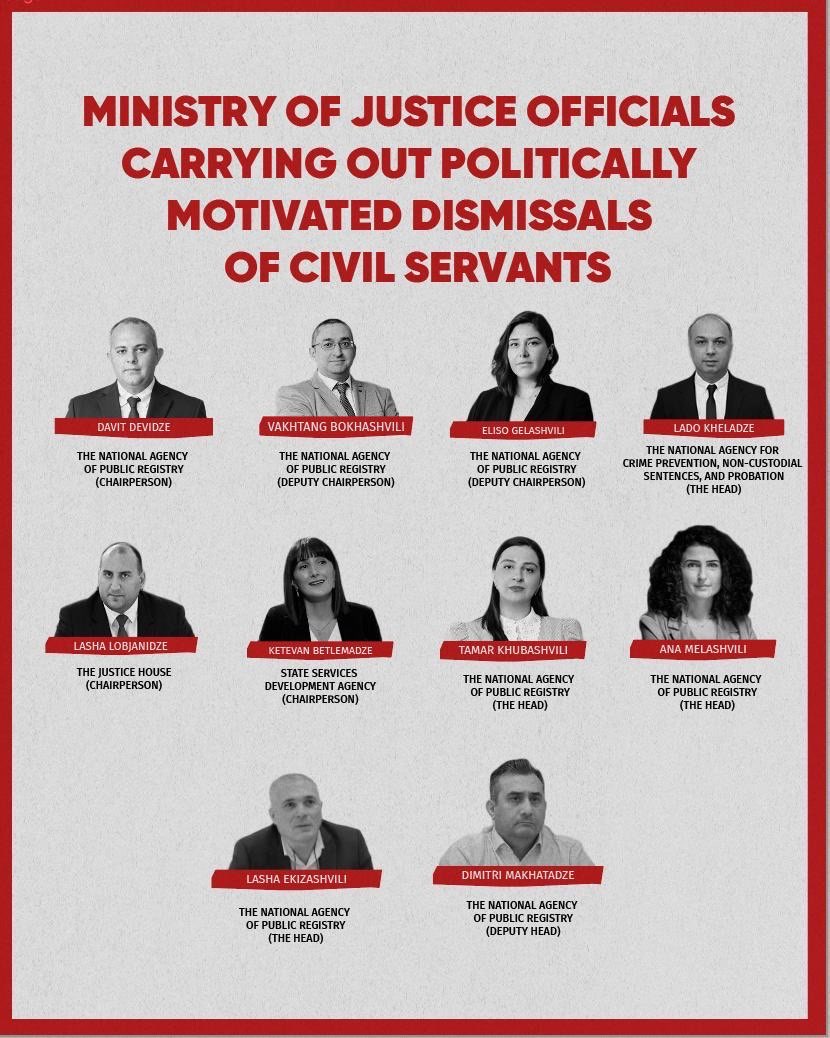
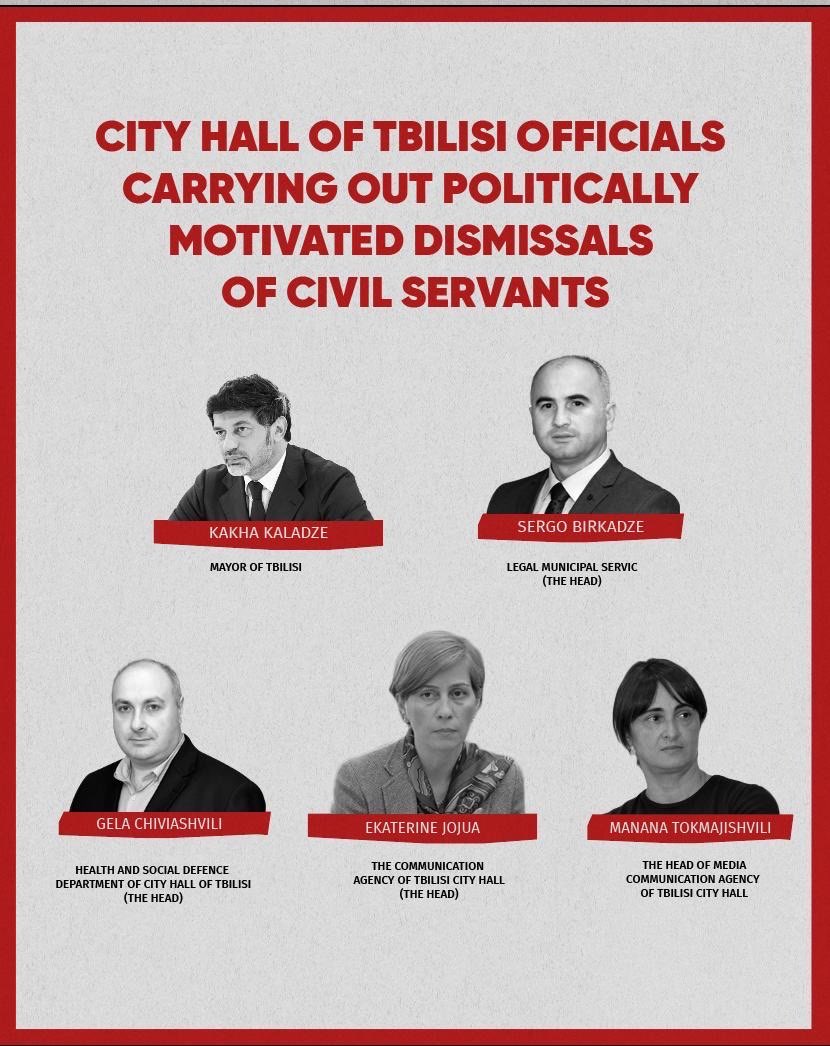
The threats were implemented within days, and on December 13, the Georgian Dream party expedited amendments to the "Law on Public Service" after just five days of discussions. These changes transformed the public service, which should be based on professionalism and neutrality, into a tool of political obedience.
By late December, public servants began speaking out about illegal dismissals, targeted low performance evaluations, and other forms of harassment due to their opinions. The nature, scope, timing, and lack of justification for these dismissals indicate that they are punitive measures meant to intimidate public servants.
Politically Motivated Dismissals
The official justification for dismissals is often cited as the expiration of contracts. However, in practice, public servants were dismissed for:
- Signing protest statements on behalf of their respective agencies and demanding adherence to Article 78 of the Constitution;
- Participating in protest rallies;
- Publicly criticizing state violence against peaceful demonstrators, including on social media.
Discriminatory dismissals have been reported from various public institutions, including:
- The National Agency of Public Registry
- From the services of Tbilisi City Hall
- The National Agency for Crime Prevention, Non-Custodial Sentences, and Probation
- The Central Election Commission
- The Adjara Tourism and Resorts Department
- The Parliament of Georgia
- The Ministry of Foreign Affairs
- The Justice House
- The Public Safety Management Center 112
- Rustavi Municipality
- Adigeni Municipality
- The National Agency of State Property
- The Government Administration of Georgia
- The Ministry of Internal Affairs
- The National Forensics Bureau
- The Legal Aid Bureau
- The Personal Data Protection Service
- The Youth Municipality of Mestia.
Reorganization as a Tool of Repression
Reorganization is frequently used as a tool for repression. Notably, the law was amended to support such illegal reorganizations, including provisions that prevent reinstatement even if a dismissed employee wins a court case.
Performance Evaluations as a Repressive Instrument
In addition to dismissals, low-performance evaluations are used as a tool of repression. Reports indicate that 26 employees of Batumi City Hall who signed protest statements, participated in rallies, and openly expressed their positions were unfairly given low scores during evaluations without justification, resulting in a reduction of their so-called "13th salary."
Scale of Repressions
According to the Independent Trade Union of Public Servants - "Article 78 of the Constitution," 70 employees from 16 public institutions have been dismissed. Dozens more report discriminatory treatment, including baseless negative evaluations and restrictions on bonuses and awards.
Purpose of Repressions
These repressive measures, coupled with the amendments to the "Law on Public Service," aim to further subordinate the public service to the ruling party's vertical control. The goal of these political repressions is to suppress public servants’ political expression and civic engagement through the fear of job loss.
The collective actions described above contain elements of a crime under Article 156 of the Georgian Criminal Code, which addresses persecution committed through abuse of official authority.
Our Support
We, as civil society organizations, stand in solidarity with public servants who have faithfully served the public for years and support the protection of Article 78 of Georgia’s Constitution. We are documenting ongoing repressions in the public sector and providing evidence of state terror to the international community.
We also offer legal assistance and court representation to public servants who have been dismissed or harassed for political reasons. For assistance, please contact our hotline at +995 599 948 671.
